


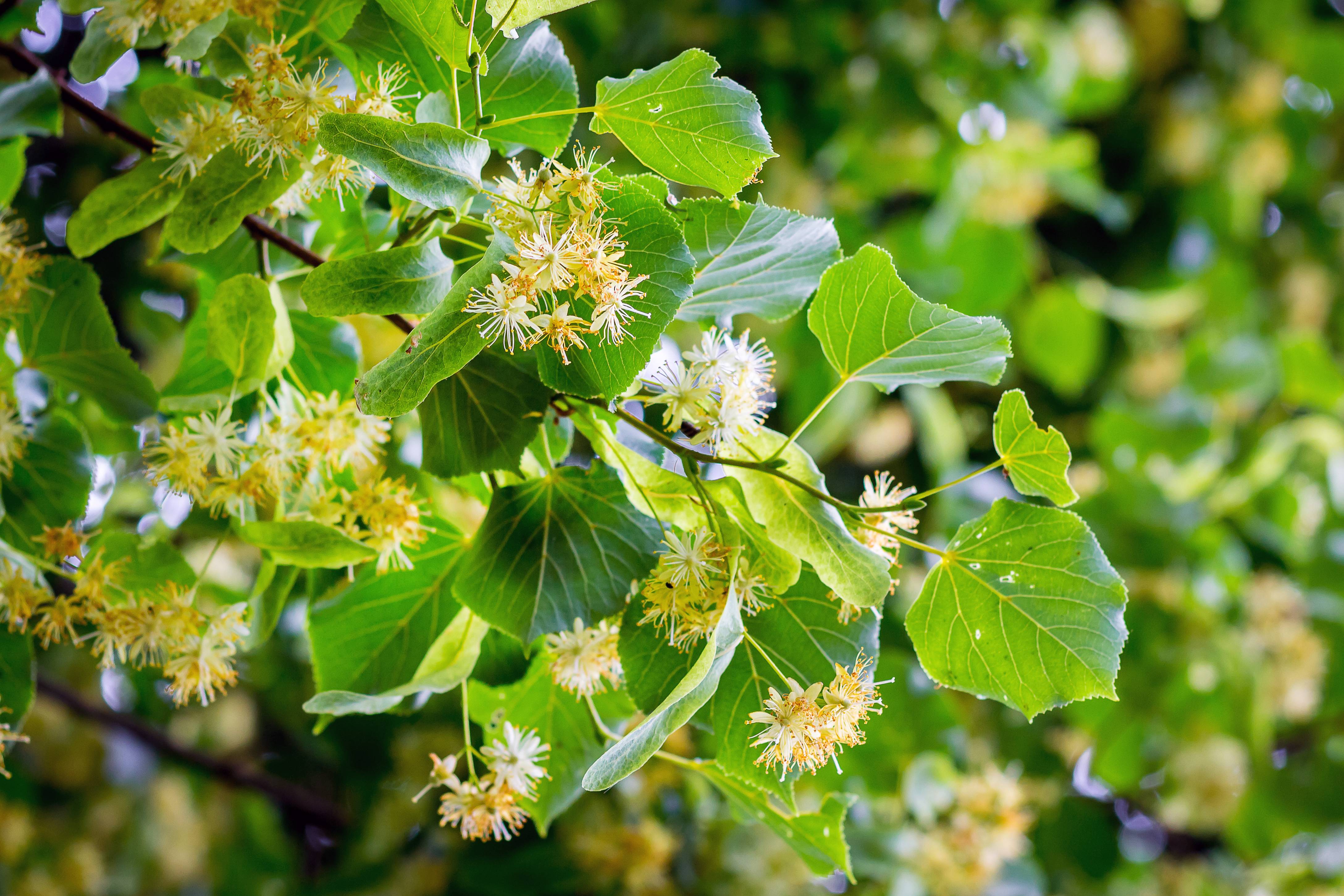
Linden (Tilia) - is a beautiful tree valued for its decorative qualities as well as its medicinal properties.
🌳 Linden (Tilia) – The Tree of the Heart and Calmness
🌿 General Description
The linden is a noble tree with heart-shaped leaves and fragrant flowers, renowned for its therapeutic properties and calming presence in parks, alleys, and gardens. In many European cultures, the linden symbolizes peace, love, wisdom, and family bonds.
🔬 Botanical Classification
- Kingdom: Plantae
- Class: Magnoliopsida
- Order: Malvales
- Family: Malvaceae
- Genus: Tilia
- Common species:
- Tilia cordata – Small-leaved linden
- Tilia platyphyllos – Large-leaved linden
- Tilia tomentosa – Silver linden
🌱 Botanical Characteristics
- Height: 🌳 20–35 meters
- Lifespan: ⏳ 300–500 years (exceptionally over 700 years)
- Leaves: 🍃 Heart-shaped, serrated edges, pointed tip
- Flowers: 🌼 Small, yellow, very fragrant, grouped in drooping inflorescences, bloom in summer (June–July)
- Fruits: 🌰 Small woody nuts, often wind-dispersed with a wing-like bract
🌍 Geographic Distribution
Linden trees originate from temperate regions of the Northern Hemisphere and are found in:
- Europe – Romania 🇷🇴, Germany, Czech Republic, Poland, France
- Asia – Anatolia, Caucasus, Siberia
- North America – introduced species
In Romania, linden trees grow naturally in lowland and hill forests and are commonly planted in cities.
🧪 Chemical Composition (in flowers)
- Flavonoids (quercetin, tiliroside) – antioxidant effects
- Essential oils – with farnesol, linalool
- Mucilage – soothing effect
- Tannins – astringent properties
- Phenolic acids – calming, anti-inflammatory
🩺 Medicinal Uses
Linden flowers are among the most popular medicinal plants in European herbal medicine:
- 🍵 Calming infusions – for insomnia, anxiety, stress
- 🫁 Natural expectorant – for colds, flu, bronchitis
- 🌡️ Antipyretic – reduces fever via sweating
- 🧘♀️ Muscle and mental relaxant – ideal for de-stress treatments
- 🧴 Topical use – compresses for irritated eyes or inflamed skin
🪵 Practical Uses
- Linden wood:
- 🔨 Light and soft, easy to carve – ideal for icons, frames, crafts
- 🧰 Used in marquetry, fine carpentry, and musical instruments (e.g., sound boxes)
- Beekeeping:
- 🍯 Linden flowers are an excellent nectar source → producing high-quality linden honey
🐝 Ecological Importance
- 🌼 Major melliferous plant – attracts bees, bumblebees, butterflies
- 🌳 Shade tree – perfect for urban parks
- 🍃 Pollution filter – dense foliage traps airborne particles and cools the air
🧵 Symbolism and Culture
- ❤️ Linden leaf = symbol of love, femininity, warmth
- 🕊️ In Slavic and Germanic mythology, the linden was a sacred tree protecting marriage and women
- 🇷🇴 Linden is a national symbol in Romania (Iași – "City of Lindens")
- 📚 Mihai Eminescu wrote under a famous linden in Copou, now a historical monument
🧾 Cultivation and Care
- Soil: prefers fertile, well-drained, slightly acidic soils
- Exposure: full sun or partial shade
- Watering: regular watering during early years
- Pruning: tolerates shaping well
- Propagation: by seed (with stratification) or cuttings
⚠️ Precautions
- ❗ Avoid excessive consumption of linden tea over long periods – may cause mild drowsiness or affect the heart in sensitive individuals
- 🐝 Silver linden (Tilia tomentosa) may produce excessive nectar – in extreme heat, this can sometimes affect pollinators (ongoing scientific debate)
📚 Curiosities
- 📏 A mature linden can have a crown diameter over 15 meters
- ⏳ Some monumental lindens in Europe are over 700 years old (e.g., Linden of Linde, Germany)
- 🪕 Linden wood is favored for crafting musical instruments (violas, guitars, cobzas)