


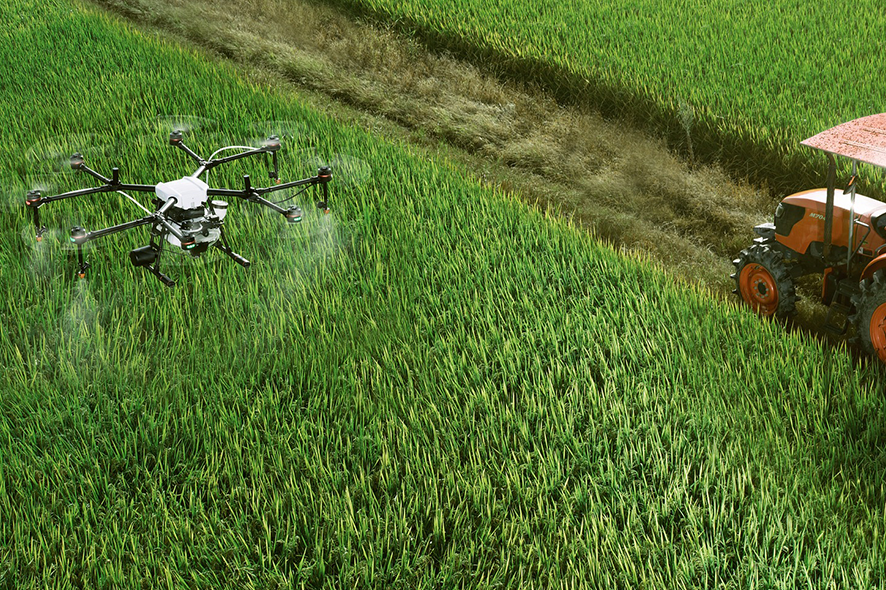
Precision agriculture (PA) is a new concept in agriculture that uses technology to ensure that both crops and soil get exactly what they need for optimal health and productivity.
🌐 Precision Agriculture
"Where Technology Meets the Land"
🔎 What is Precision Agriculture?
🌾 Precision agriculture is a modern method of managing farmland that uses advanced technologies to increase yields, reduce costs, and protect the environment.
📡 It involves using sensors, GPS, drones, GIS software, and smart equipment to precisely analyze and manage:
- fertilization
- irrigation
- planting
- harvesting
- crop protection
🧠 The goal? To make informed decisions tailored to every square meter of land.
🛠️ Key Technologies in Precision Agriculture
📍 GPS and GIS (Geographic Information Systems)
• Enable mapping of soil, nutrients, and crop conditions.
• Help guide machinery with centimeter accuracy.
🛰️ Remote Sensing (drones, satellites)
• Aerial monitoring of crop health.
• Early detection of water stress, deficiencies, or pests.
🌱 Soil and climate sensors
• Measure moisture, temperature, pH, nitrogen levels, etc.
• Provide real-time data for optimal decisions.
🧮 Agricultural software and big data
• Analyze collected data and provide recommendations.
• Enable precise planning of operations and resources.
🤖 Smart agricultural machinery (autonomous tractors, variable-rate sprayers)
• Perform tasks with minimal waste and maximum efficiency.
🎯 Concrete Benefits for Farmers
💰 Reduced input costs
• Precise dosing of fertilizers and pesticides
• Lower fuel and time consumption
🌿 Environmental protection
• Targeted application avoids overdosing and water pollution
📈 Increased productivity and crop quality
• Continuous monitoring prevents losses and optimizes timing
📊 Data-driven decision making
• Every decision backed by clear information
🧑🌾 Efficient and digital farm management
• The farm becomes more organized, transparent, and future-ready
🌍 Precision Agriculture in the Republic of Moldova
📌 Although still in its early stages, precision agriculture is gaining ground among Moldovan farmers.
✅ Farmers and agricultural cooperatives are starting to adopt:
• drones for aerial inspections
• local weather sensors
• farm management applications
🔧 International projects (e.g., USAID, IFAD, Moldova Orchard Project) provide funding for equipment and training.
🧑🏫 Practical Guide for Beginners
- 📋 Evaluate your farm’s needs
→ What crops do you grow? What area? What challenges do you face? - 💻 Choose a suitable digital platform
→ Examples: AgroMap, Cropio, Climate FieldView - 📦 Invest gradually in equipment
→ Start with sensors or an agricultural drone - 📚 Attend courses and training
→ Offered by NGOs, EU projects, agricultural universities - 🔁 Continuously test and adapt
→ Each farm is unique: experiment and learn
📊 How Does Precision Agriculture Work in Practice?
🌍 Field data is integrated into a digital system that analyzes it and generates customized maps and reports.
➡️ Examples of decisions made:
• Variable-rate fertilization based on soil fertility zones
• Identification of phytosanitary problem areas for targeted treatment
• Adjusting irrigation according to actual soil moisture
• Optimizing machinery routes to reduce fuel consumption
🧑🔧 Agricultural Case Studies
🌾 Corn farm in Ukraine:
• Used drones with multispectral cameras to detect drought-affected zones
• Reduced water consumption by 20% while increasing yield by 15%
🍇 Vineyard in Italy:
• Implemented soil moisture sensors and analysis software
• Monitored conditions in real-time and applied tailored treatments, avoiding losses
🧩 Components of a Precision Agriculture System
- Hardware: GPS, drones, sensors, smart tractors
- Software: monitoring platforms, management apps, AI for predictions
- Data: topography, soil, climate, crop
- Users: farmers, agronomists, consultants
⚠️ Challenges and Limitations
- High initial costs for equipment and training
- Need for digital literacy among users
- Dependence on connectivity and data accuracy
- Adapting technologies to local specifics and diverse crops
🌟 Future Trends in Precision Agriculture
🚜 Full automation – autonomous tractors and combines
🧬 Integrated digital agriculture – connecting sensors with AI for predictive decisions
🛰️ New types of sensors – for real-time nutrient monitoring
🌱 Sustainable agriculture – reducing ecological footprint through precise management
📚 Useful Resources for Farmers
- Free online courses on digital agriculture (e.g., Coursera, FutureLearn)
- Government programs and NGOs supporting farm modernization
- Agricultural communities and forums for experience exchange
🧠 Conclusion
Precision agriculture is not a fad but a necessity for modern farming. Facing climate change, price volatility, and sustainability pressures, farmers need smart tools that turn data into decisions and decisions into results.
🌾 With small steps and continuous learning, Moldovan agriculture can become not only more productive but also greener, more efficient, and competitive.