


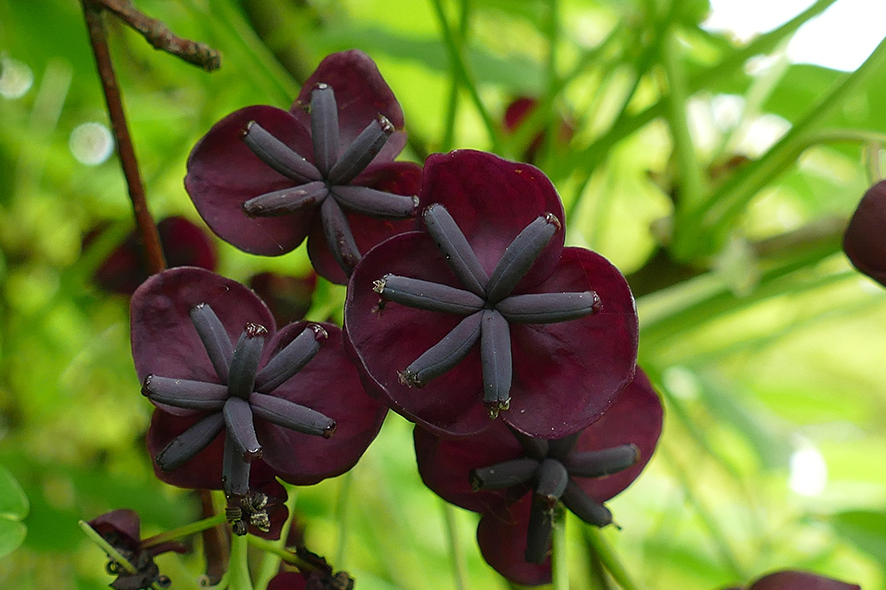
Akebia quinata, also known as five-leaf akebia, is a decorative climbing plant with exotic flowers and aromatic fruits.
🌺Cultivating Akebia Quinata – An Exotic Plant for Your Garden
🌸 General Description
Akebia quinata is a semi-evergreen climbing plant native to East Asia (Japan, Korea, and China). Also known by the common names “five-leaf vine” or “chocolate vine,” it is valued for its decorative foliage, fragrant flowers, and edible fruits.
- 🔬 Scientific name: Akebia quinata (Thunb.) Decne.
- 🌱 Family: Lardizabalaceae
- 🧬 Species: The most well-known is quinata (with five leaflets), but there is also Akebia trifoliata.
- 📏 Size: Can reach 10–12 m in height when supported.
- 🍃 Leaves: Compound, with 5 oval leaflets, olive-green and glossy.
- 🌺 Flowers: Purple-violet, clustered in racemes, lightly fragrant, blooming in early spring.
- 🍆 Fruits: Oval, pale violet, with a gelatinous interior and black seeds – edible.
📍 Origin and Distribution
- 🌏 Native to temperate regions of:
- Japan
- China
- South and North Korea
- 🌍 Currently cultivated as an ornamental plant in:
- Europe (especially the UK, France, Germany, Romania)
- North America (in gardens and parks)
- ⚠️ In some regions (e.g., eastern USA), it is considered invasive due to rapid growth and adaptability.
🌼 Uses
- 🌳 Ornamental:
- Ideal for hedges, pergolas, gazebos, or walls.
- Very decorative and exotic in natural or zen gardens.
- 🍇 Edible:
- Fruits have a sweet taste similar to cantaloupe.
- The gelatinous interior can be eaten raw; sometimes the rind is roasted.
- 🌿 Medicinal (in traditional Chinese medicine):
- Dried stems (known as Mu Tong) are used for:
- reducing inflammation
- stimulating lactation
- detoxifying the body
- Contains saponins, tannins, and alkaloids.
- Dried stems (known as Mu Tong) are used for:
- 🧶 Decorative in crafts:
- Stems can be dried and used for weaving or rustic decorations.
🌱 Cultivation and Care
- ☀️ Exposure: Full sun or partial shade.
- 🌡️ Hardiness: Tolerates temperatures down to -15°C (5°F).
- 🏡 Soil: Prefers fertile, well-drained, slightly acidic soils.
- 💧 Watering: Moderate – does not tolerate waterlogging.
- ✂️ Maintenance:
- May require regular pruning to control growth.
- Recommended to tie on trellises or vertical supports.
- 🌸 Flowering: Spring (March–May), followed by fruiting in autumn.
- 🌻 Pollination: Dioecious plant (separate male and female flowers) – requires at least two compatible plants for fruit production.
⚠️ Precautions and Notes
- 🚫 Invasiveness: Considered invasive in some areas (USA).
- 🐶 Toxicity: No clear evidence of toxicity to animals, but seeds are not recommended for excessive consumption.
- 🌱 Propagation: By seeds, cuttings, or layering (in spring).
🌿 Interesting Facts
- 👃 Flowers emit a pleasant scent reminiscent of vanilla or chocolate, hence the common name.
- 🎍 Traditionally cultivated in Japanese zen gardens, and fruits are regarded as an autumn delicacy.
- 🍬 Fruits are sometimes used in artisanal desserts in Asia.
📚 Symbolism and Culture
- 🔮 In East Asian culture, Akebia symbolizes renewal and the vitality of spring.
- 🎨 Due to its exotic appearance, it has inspired Japanese painting and poetry (haiku).
- ✨ The name Akebia comes from the Japanese “akebi” (アケビ), directly referring to the plant’s fruit.