


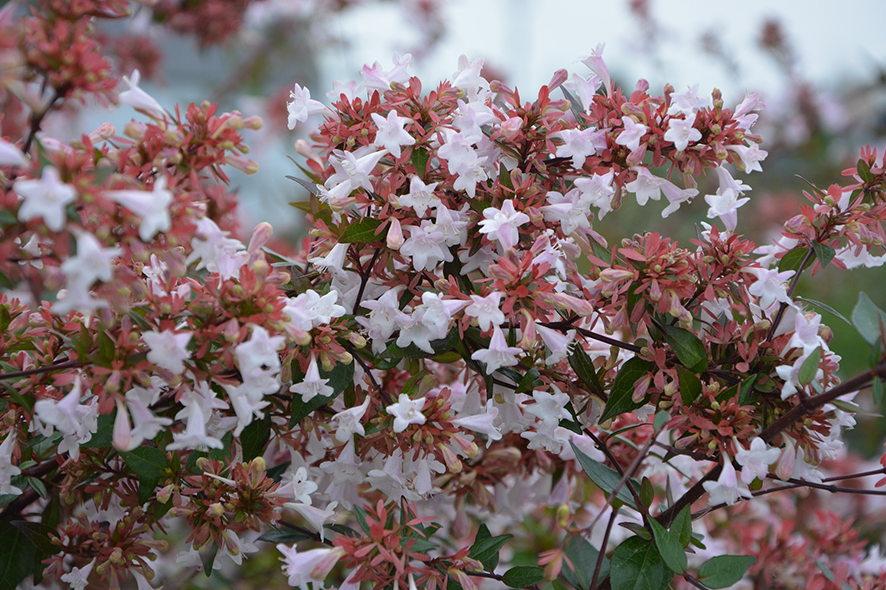
Abelia (Linnaea Grandiflora) - is a decorative shrub known for its beautiful and fragrant flowers that attract attention and add charm to your garden.
🌺 Abelia – Blooming Elegance for Fragrant Gardens
🌿 General Description
Abelia is a genus of ornamental shrubs from the Caprifoliaceae family, known for its glossy foliage, delicate flowers, and pleasant fragrance. The plant is valued in decorative gardens for its elegant appearance, long blooming period, and resistance to diseases and pests. The bell-shaped flowers attract bees, butterflies, and other beneficial insects.
🔎 Scientific Name: Abelia spp.
🌿 Family: Caprifoliaceae
📏 Size: 1–2 meters in height and width, depending on species
🌸 Flower Color: white, pale pink, lilac
🕒 Blooming Period: June – October
🌍 Origin: East Asia (China, Japan), Mexico
🧬 Popular Species
There are about 30 species of Abelia, the most known and cultivated being:
- Abelia × grandiflora – the most widespread species, a hybrid between A. chinensis and A. uniflora
- Abelia chinensis – native to China, blooms abundantly
- Abelia schumannii – intense pink flowers with a subtle fragrance
- Abelia mosanensis – highly fragrant and cold-hardy
- Abelia floribunda – with red flowers, rarely cultivated, native to Mexico
🌎 Distribution
🌐 Abelia is primarily native to East Asia (especially China, Korea, and Japan), but some species originate from Central America. Due to its ornamental value, the plant has also spread and naturalized in:
- 🇺🇸 USA – southern and western regions
- 🇬🇧 United Kingdom – in gardens and parks
- 🇫🇷 France – often used in hedges
- 🇷🇴 Romania – ornamental plant in private and public gardens
🌱 Cultivation and Care
🌞 Exposure: Prefers full sun but tolerates partial shade
🌡️ Hardiness: Hardy in areas with mild winters (down to -10 °C); A. mosanensis tolerates down to -25 °C
🌾 Soil: Slightly acidic to neutral, well-drained
💧 Watering: Moderate; requires more frequent watering during drought
✂️ Pruning: Can be trimmed after flowering to maintain a compact shape
🔄 Landscape Uses:
- Low and decorative hedges
- Solitary or grouped shrubs
- Edges of walkways and fragrant gardens
- Large containers for terraces
🌸 Floral Characteristics
The flowers grow in clusters and have a tubular, slightly curved shape attractive to pollinators. The fragrance ranges from subtle to strong (especially in A. mosanensis). Blooming is abundant and extends throughout summer until late autumn.
🌼 Additionally, some varieties have semi-evergreen or evergreen foliage, turning reddish or bronze in the cold season, providing year-round visual interest.
🐝 Ecological Benefits
- 🌸 Attracts pollinators: bees, bumblebees, butterflies
- 🌱 Provides shelter for small insects
- 🐦 Can serve as protective shrubbery for birds
🏡 Uses
🏞️ Ornamental
- Residential or public gardens
- Terraces and courtyards (in large pots)
- Fragrant hedges
🌿 Aromatherapy (limited use)
- Some highly fragrant species (e.g., Abelia mosanensis) are used in sensory gardens
❗ Note: The plant is not used in traditional medicine and has no known culinary uses.
⚠️ Precautions
- ❄️ Sensitive to severe frost (hybrid species)
- 🚫 Not edible – consumption of flowers, leaves, or fruits is not recommended
- 🦟 Sometimes attracts aphids or woolly scale insects but is rarely seriously affected
📚 Curiosities
- Abelia was named in honor of Clarke Abel, an English naturalist who explored China in the 19th century.
- It was introduced into European gardens during the Victorian era and quickly became popular for its continuous blooming.
- In some Asian cultures, Abelia is associated with serenity and balance in Zen gardens.
🧭 Conclusion
Abelia is a refined choice for gardeners seeking an ornamental plant with elegant appearance, long blooming, attractive foliage, and low maintenance. It is ideal for modern gardens as well as classic landscapes. Versatile and undemanding, Abelia deserves a place of honor in any green space!