


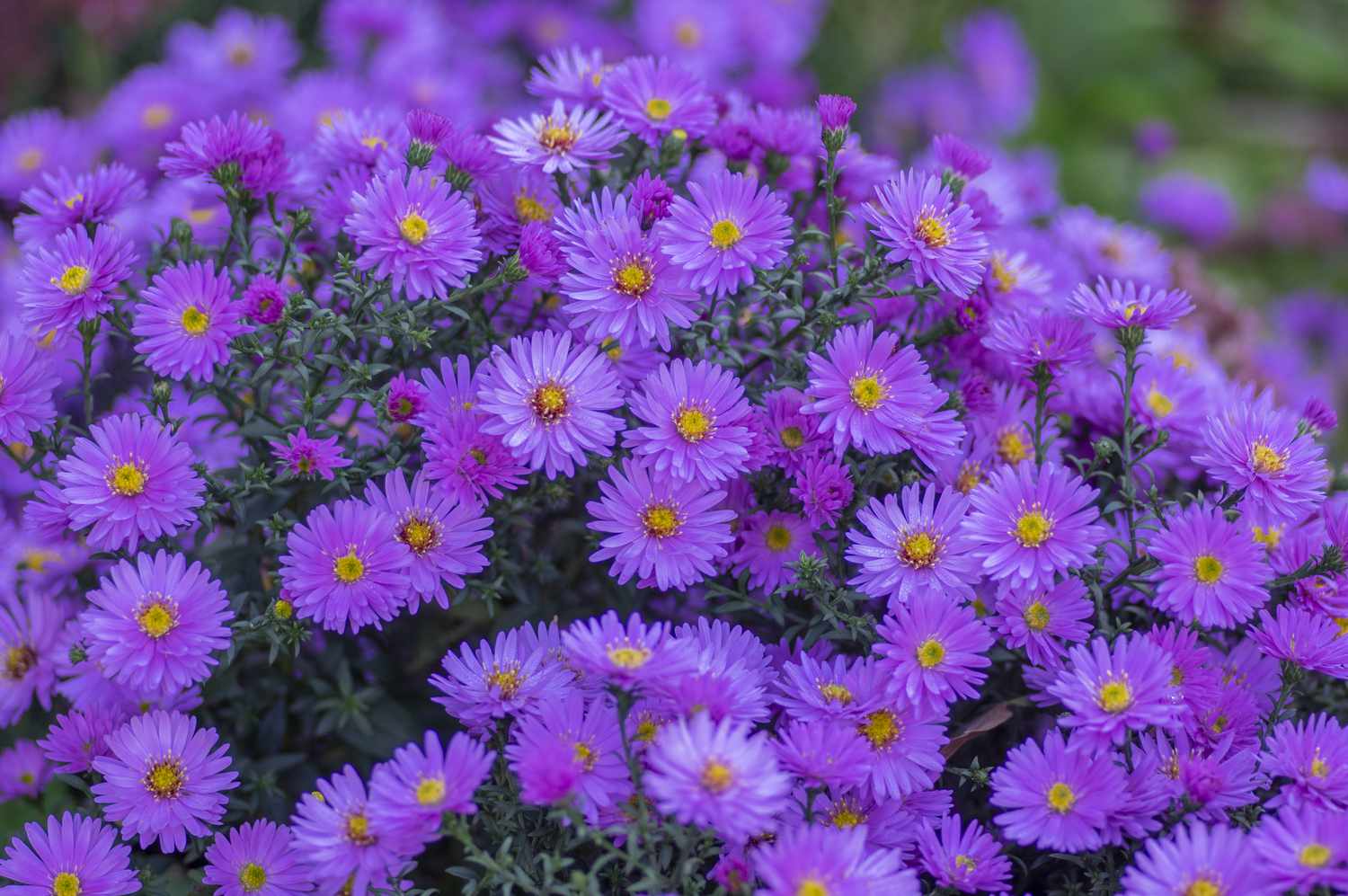
Aster (Astēr) - are popular ornamental plants known for their vibrant flowers and wide variety of species.
🌸 The Aster Flower – The Queen of Autumn in Starry Colors
The name comes from the Greek word "ἀστήρ" (astēr), meaning "star," referring to the flower’s distinctive petal shape.
🌍 Origin and Distribution
🔹 Geographic Origin:
Asters are native to the temperate regions of Europe, Asia, and North America. North American species are among the most numerous and diverse.
🔹 Distribution:
- 🌾 Widely cultivated in gardens worldwide, especially in Central Europe, the United States, Canada, China, and Japan.
- ☀️ Prefers temperate climates with mild summers and long autumns.
🔹 Natural Habitat:
- Naturally grows in meadows, forest edges, fields, and sunny hillsides.
🌼 Botanical Characteristics
🔸 Family: Asteraceae (Compositae)
🔸 Type: Perennial plant
🔸 Height: Between 20 cm and 1.2 m, depending on species
🔸 Flowers: Small to medium-sized, with radial petals and yellow centers
🔸 Blooming Period: Late summer through late autumn (August – November)
🔸 Colors: 🌸 pink, 💜 purple, 💙 blue, ⚪ white, 💗 lilac
🌱 Care and Cultivation
🪴 Preferred Location:
- Fertile, well-drained soil
- Full sun or partial shade
💧 Watering:
- Regular but avoid overwatering
- Tolerates drought once established
✂️ Maintenance:
- Remove faded flowers to encourage blooming
- Divide plants every 2–3 years to maintain vigor
🐝 Ecological Benefits:
- Attracts bees, butterflies, and other pollinators 🐝🦋
- Supports urban biodiversity in gardens and parks
🎨 Symbolism and Meanings
🌟 In Mythology and Traditions:
- In Greek culture, asters are said to have sprung from the tears of the goddess Astraea, saddened by the world’s injustices.
- Romans believed burning aster flowers would ward off evil spirits and bring protection.
💌 Associated Symbols:
- Loyalty and devotion 🤝
- Hope and delicate love 💖
- Elegance and refinement 👑
- The birth flower of September (in the floral zodiac)
🌺 Uses
🏡 Ornamental:
- Grown in gardens, borders, and flower beds due to late blooming and elegant appearance.
- Commonly used in autumn bouquets and festive floral arrangements 🍂💐.
🌿 Traditional Medicinal Use:
- Some North American aster species were used to:
- Soothe coughs and sore throats
- Reduce inflammation
- Act as a natural antiseptic
⚠️ Not all species are safe for internal use without expert guidance.
🐝 Ecological:
- Supports late-season pollination — among the last nectar sources for bees and butterflies before winter.
📚 Fascinating Facts
✨ There are over 180 species of asters; some well-known include:
- Aster novi-belgii – the "New York Aster" 🇺🇸
- Aster amellus – “Eye of the Sky,” native to Europe 🇪🇺
- Aster alpinus – grows in mountainous areas 🏔️
✨ The aster is Hungary’s national flower 🇭🇺
✨ In Victorian flower language, it symbolized secret thoughts or unspoken love.
📌 Visual Summary
- 🌿 Category & 📋 Details
- Type – Perennial plant
- Blooming – August to November
- Symbolism – Hope, love, refinement
- Cultivation areas – Europe, North America, Asia
- Uses – Ornamental, traditional medicine
- Attractive to – Bees, butterflies, gardeners
- Common colors – White, pink, purple, lilac, blue