


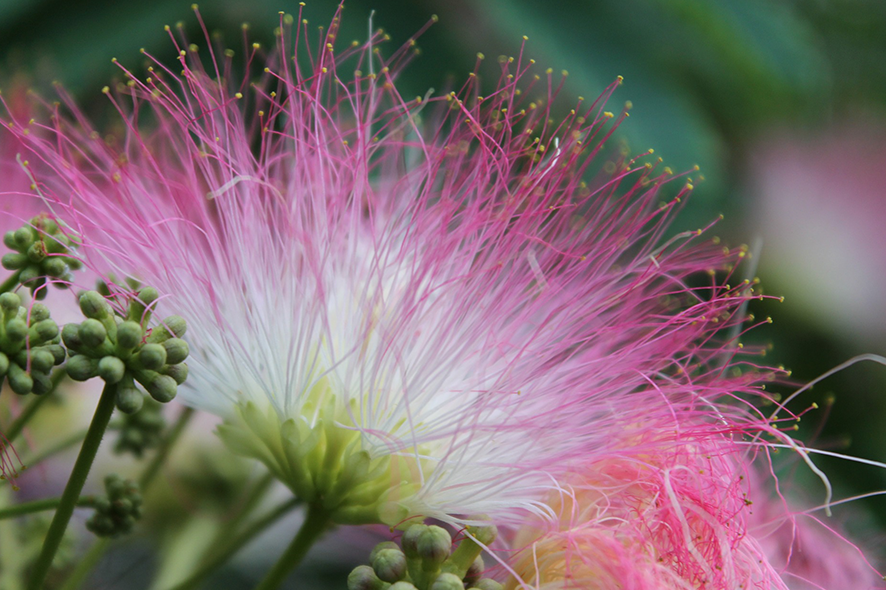
Albizia (Julibrissin) - also known as the "Silk Tree", is a decorative tree with beautiful flowers and delicate, silky leaves.
🌸Cultivating Albizia – An Exotic Tree for Your Garden
🌿 Botanical Description
- Scientific name: Albizia julibrissin Durazz.
- Family: Fabaceae (Legumes)
- Origin: Western and Eastern Asia – from Iran to China and Korea
- Height: 5–16 m, with a wide crown and arching branches
- Leaves: bipinnate, fern-like, composed of 6–12 pairs of pinnae, each with 20–30 oblong leaflets
- Flowers: pink, fragrant, fluffy appearance, made up of long stamens 2–3 cm in length; blooms in summer
- Fruits: flat brown pods, 10–20 cm long, containing several seeds
🌍 Distribution and Habitat
Originally native to regions from Iran to China and Korea, Albizia julibrissin has spread worldwide due to its ornamental value. It is widely cultivated in gardens and parks across Europe, North America, and other temperate regions.
In the United States, it was introduced in 1745 and has naturalized in many states, becoming invasive in some areas such as southern New York, New Jersey, Connecticut, Missouri, Illinois, Florida, and Texas.
🏡 Cultivation and Care
- Light: prefers full sun
- Soil: adapts to a wide range of soils including sandy, loamy, and clay soils; tolerates acidic to moderately alkaline soils
- Watering: drought-tolerant once established; requires regular watering during the first years
- Pruning: recommended in autumn or winter to maintain desired shape
- Hardiness: can tolerate low temperatures but is sensitive to severe frost
🌸 Ornamental Uses
Albizia julibrissin is valued for:
- Its spectacular and fragrant flowers
- Delicate, fern-like foliage
- Its broad crown providing pleasant shade
It is often planted in gardens, parks, and along walkways for its aesthetic appeal.
🌿 Medicinal Uses
In traditional Chinese medicine, Albizia julibrissin is used for:
- Reducing anxiety and depression
- Improving sleep quality
- Anti-inflammatory and antioxidant properties
Extracts from the flowers and bark are used in various preparations for their benefits to the nervous system and overall well-being.
⚠️ Precautions and Ecological Considerations
- Toxicity: seeds and pods can be toxic to pets and livestock
- Invasiveness: considered invasive in some regions, requiring monitoring and control
- Susceptibility: prone to fungal diseases such as vascular wilt caused by Fusarium
🌱 Conclusion
Albizia julibrissin is a remarkable ornamental tree that offers beauty and multiple benefits in gardens and landscapes. However, it is essential to consider its potential invasive effects and the need for proper management to prevent negative impacts on local ecosystems.