


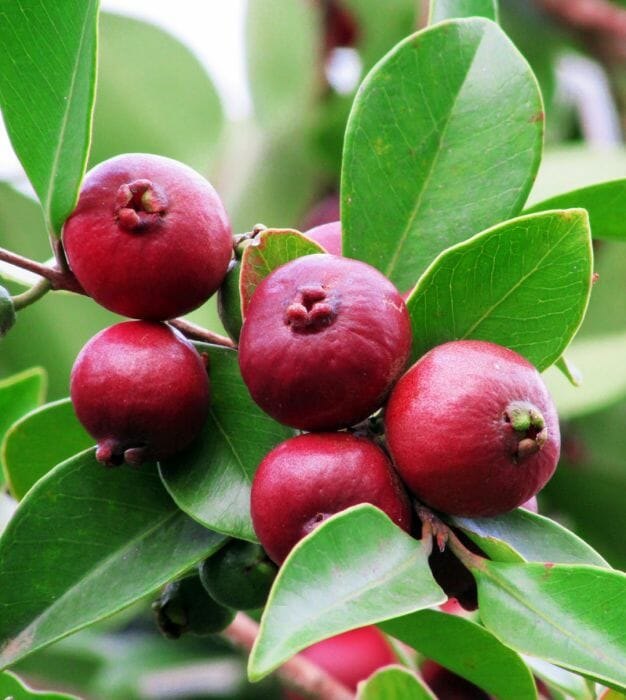
Strawberry Guava (Psidium cattleianum) is a fruit tree grown for edible fruit, garden value and orchard production.
🌳 Strawberry Guava – fruit tree
🌿 General description
Strawberry Guava is valued for fruit production and its use in family gardens or commercial orchards. Rootstock choice, site selection and regular maintenance influence vigor, bearing age and harvest quality.
🧬 Botanical classification
- Family: Myrtaceae
- Scientific name: Psidium cattleianum
- Crop type: fruit tree
- Suitable zone: subtropical climate
📍 Distribution and use
The species is cultivated where climate and soil are suitable, in orchards, gardens and specialized plantations. Fruit can be eaten fresh, processed or marketed locally depending on the crop.
☀️ Growing requirements
- Light: choose a bright, well-aired position.
- Soil: fertile, well-drained soil prepared before planting is preferred.
- Water: irrigation matters during establishment, drought and fruit growth.
🌱 Planting
- Prepare the plot and remove perennial weeds.
- Dig the planting hole and add mature compost if the soil is poor.
- Plant at the correct depth with roots spread naturally.
- Water well and stake the tree where needed.
✂️ Care
- Training and fruiting pruning keep the canopy open.
- Mulch helps preserve moisture and reduce weeds.
- Diseases and pests should be monitored regularly.
- Fertilization is adjusted to tree age and soil condition.
🍎 Harvest and storage
Fruit is harvested at the right maturity for the species. For storage, select healthy fruit without bruises; fast processing helps reduce post-harvest losses.
✅ Conclusion
Strawberry Guava can be a valuable crop in orchards and gardens when matched correctly to climate, soil and production goals.